
Sometimes the pain stops, but the cause usually stays. A toothache that fades without treatment often means the infection or damage is still there. Call us if your tooth hurts for more than a day or two, even if it feels better now.
Written by Mardi Jacobson. Medically reviewed by Dr. David Jacobson, DDS, Dentist and Owner. Last updated October, 2026.
Why a toothache can fade without healing
Tooth pain comes from the nerve inside the tooth. When the pain stops, one of three things happened.
- The problem was minor. A bit of gum irritation, a food stuck between teeth or temporary sensitivity can settle down by itself.
- The nerve stopped sending signals. A deep cavity or infection can damage the nerve until it dies. The pain stops, but the infection keeps growing.
- An abscess drained. The pressure eased, but the infection remains.
Pain in an upper tooth can also come from a sinus infection, so an exam helps sort out the cause.
How long does a toothache last?
It depends on the cause. Here are rough timelines by cause:
- Food or debris between teeth: minutes to a day, and gone once you floss it out.
- Sensitivity after a filling or whitening: a few days to 2 weeks, fading a little each day.
- Sinus pressure in the upper back teeth: clears with the sinus infection, usually 7 to 10 days.
- A cracked tooth: comes and goes for weeks or months when you bite. It doesn’t resolve on its own.
- A cavity that reaches the nerve: constant or throbbing pain until it’s treated. If it suddenly stops, the nerve has likely died, and an abscess can follow.
- An abscess: pain and swelling for days. It may ease for a while if the abscess drains, but the infection stays.
A useful rule: pain that gets better each day is probably healing. Pain that’s the same or worse after 48 hours needs an exam.
What your type of tooth pain can mean
Your symptoms give clues. Only an exam and x-rays can confirm the cause.
| What you feel | Possible cause | What to do |
|---|---|---|
| Quick zing with cold or sweets | Worn enamel or a small cavity | Book a visit this week |
| Pain when you bite down | A cracked tooth or a loose filling | Call us within a day or two |
| Throbbing pain that lingers or wakes you at night | Infected nerve | Call us today |
| Swelling or a bump on your gum | Abscess | Call us today |
| Sore gums and bleeding when you brush | Gum irritation or gum disease | Book a visit this week |
Learn more about tooth pain and how we treat it.
Common causes of a toothache
- Tooth decay. A cavity that reaches the inner layers of the tooth causes sensitivity, then pain.
- A cracked or chipped tooth. The crack exposes the nerve, so biting or temperature changes hurt.
- A loose filling or lost crown. The tooth underneath loses its protection.
- Gum problems. Inflamed or infected gums can make a tooth ache.
- Grinding or clenching. Years of pressure wear on teeth and can leave them sore.
If you grind your teeth at night, ask us about a mouthguard.
Why a toothache can come and go
A toothache can show up for a few days, disappear for a week, then return. That pattern usually points to a problem that’s still growing. Cold drinks, chewing and changes in pressure can trigger the pain, and then it settles again.
Treat a toothache that keeps returning as a warning sign. The sooner we look, the simpler the fix tends to be.
Signs you shouldn’t wait
Call us the same day if you notice any of these:
- Pain that lasts more than a day or two
- Throbbing pain, especially at night
- Swelling in your gums, cheek or jaw
- A bad taste in your mouth, or a bump that leaks fluid
- Pain when you chew or touch the tooth
Go to the ER if swelling makes it hard to breathe or swallow, spreads toward your eye or neck, or comes with a fever.
What to do until you see a dentist
- Rinse with warm salt water.
- Hold a cold compress against your cheek, 15 minutes on and 15 minutes off.
- Take an over-the-counter pain reliever as the label directs, and never take extra doses to get through the night.
- Avoid very hot, very cold and very sweet foods.
- Chew on the other side of your mouth.
Don’t put aspirin directly on your gum. It can burn the tissue. Don’t put heat on a swollen cheek either.
What happens when you see us
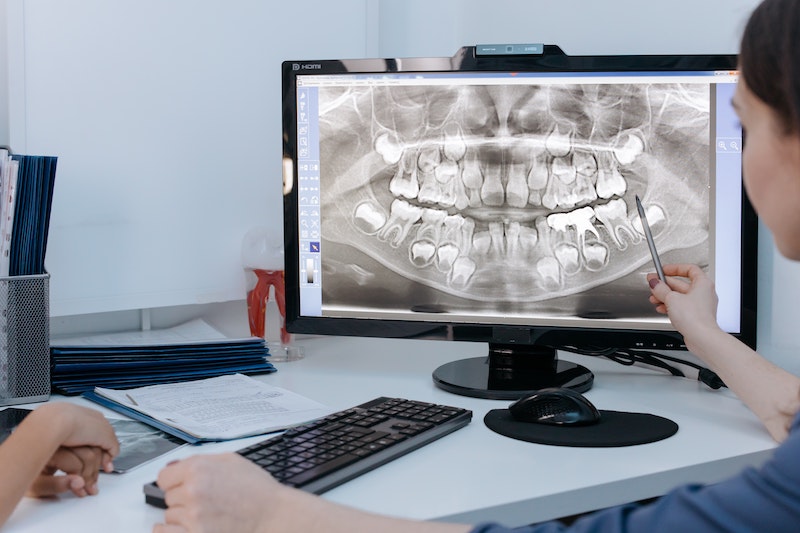
We take x-rays and examine the tooth to find the cause. Dr. Jacobson explains your options and the cost before treatment starts. Depending on what he finds, treatment can include:
- A filling for a cavity
- A crown for a cracked tooth
- A root canal for an infected nerve
- An extraction if we can’t save the tooth
Not sure whether your tooth needs a root canal? Read how do I know if I need a root canal?
We always leave appointments open for same-day emergency care. See our emergency care page for what to do before you arrive.
Why early treatment costs less
A small cavity needs a filling. A cavity left alone can reach the nerve and need a root canal and a crown. Left longer still, it can mean losing the tooth.
No insurance? Our in-house dental plans include unlimited emergency visits and x-rays, and 15% off additional treatment. Adult plans cost $550 a year, and child plans cost $475 a year.
Toothache FAQs
Can a toothache go away on its own?
Sometimes mild pain from irritation fades by itself. But pain from a cavity, a crack or an infection usually returns, and the cause keeps getting worse.
How long does a toothache last without treatment?
Minor irritation clears in a day or two. Pain from a cavity, a crack or an infection lasts until the tooth is treated, even if it pauses for a while.
Why did my toothache suddenly stop?
The nerve may have died, or an abscess may have drained. Both can ease the pain while the infection stays. Call us to get it checked.
How long can I wait before I see a dentist?
If your pain lasts more than a day or two, call us. If you have swelling, fever or throbbing pain, call the same day.
What are the signs of a tooth infection?
Look for throbbing pain, swelling in your gums or face, a bad taste, a bump on your gum and pain when you chew. Some infections cause little pain, so an exam matters.
What can I do at home for tooth pain?
Rinse with warm salt water, use a cold compress, and take an over-the-counter pain reliever as the label directs. These steps ease the pain. They don’t treat the cause.
What helps a toothache at night?
Sleep with your head raised on an extra pillow, so less blood pools in the tooth. Take a pain reliever as the label directs before bed, and use a cold compress. Call us in the morning. Pain that wakes you usually means the nerve is involved.
Is a toothache an emergency?
Severe pain, swelling or a knocked-out tooth is an emergency. Call us and we’ll find you a same-day appointment.
Tooth pain? We can see you today
Call (970) 257-7474 and we’ll find a time for you in Grand Junction.
Recent Comments